Watercolor Succulents Clip Art PSD Review
As a brand designer who has spent years curating visual identities for small businesses and digital entrepreneurs, I know that the difference between a campaign that converts and one that gets scrolled past often comes down to a single graphic design asset. Recently, I was tasked with refreshing the social media presence and packaging inserts for a boutique plant care subscription box. The goal was to move away from sterile, corporate stock photography toward something that felt organic, handmade, and trustworthy. That is when I opened the Watercolor Succulents Clip Art PSD file.
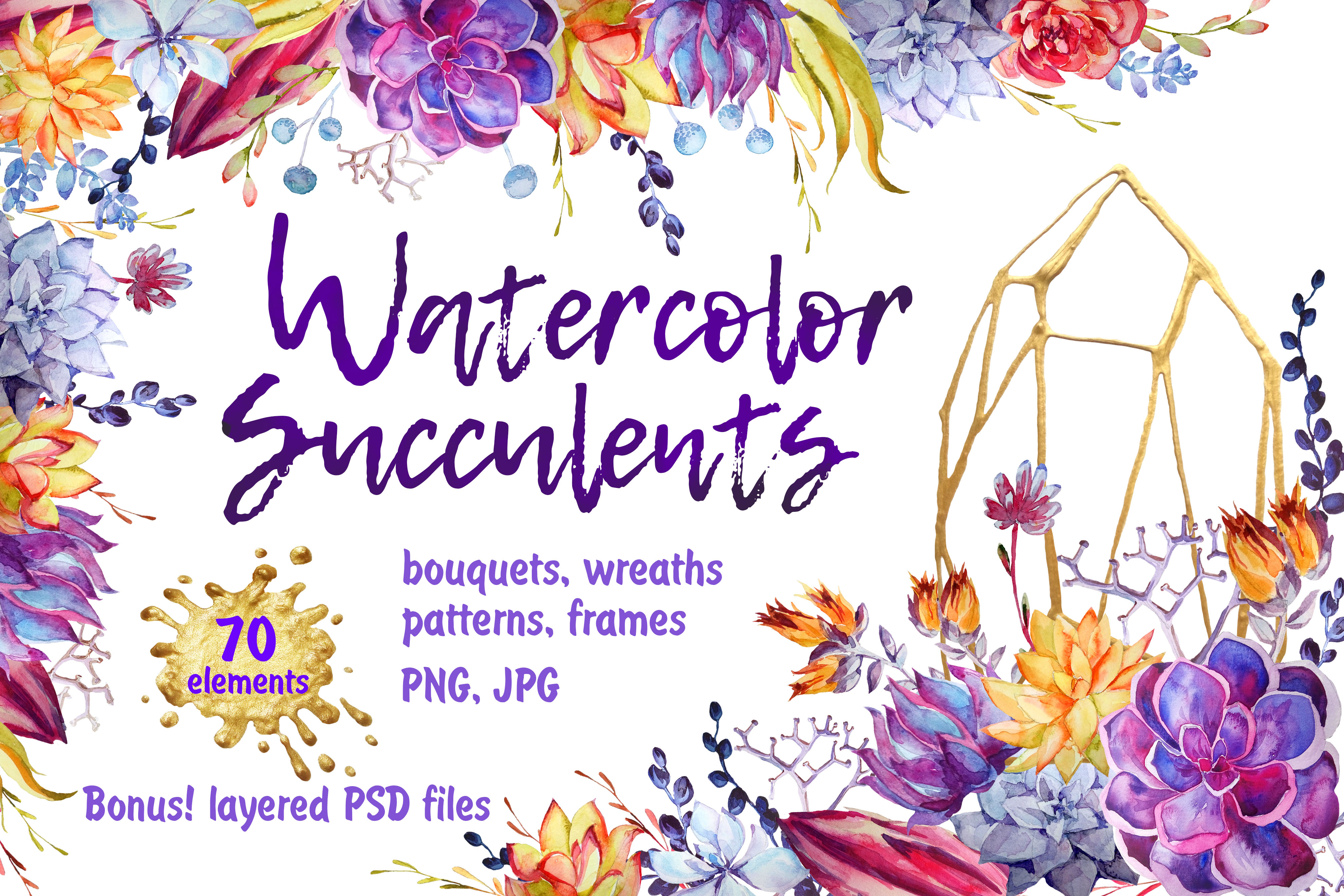
The first impression of this collection is immediately calming. Unlike the flat, vector-heavy illustrations that dominate many modern marketing visuals, these watercolor textures introduce a sense of depth and human touch. For a brand selling lifestyle products, wellness services, or handmade goods, this emotional tone is critical. It signals to the audience that there is a real person behind the business. When I dragged the first succulent into my layout, it didn't feel like a generic clipart; it felt like a piece of art that could elevate a simple Instagram post into a premium visual experience.
Elevating Brand Identity with Organic Textures
In the world of brand identity, consistency is key, but so is versatility. This creative design bundle offers a unique advantage because the watercolor style bridges the gap between casual charm and professional polish. I tested several of the succulent illustrations against our client's existing color palette. The soft greens and subtle earth tones blended seamlessly with their branding, creating a cohesive look without overwhelming the primary logo.
For small business branding, where budgets for custom illustration are often tight, assets like the Watercolor Succulents Clip Art PSD are a game-changer. They allow you to create a distinct visual language that feels bespoke. I used a large cactus silhouette as a background element for a product label mockup. The result was a packaging design that looked high-end and artisanal. The texture of the watercolor added a tactile quality to the digital proof, making the potential customer imagine the physical product even before purchase. This directly impacts audience trust; people buy from brands that look established and thoughtful.
Strategic Applications in Content Marketing
When integrating this digital product into a broader content strategy, the possibilities are vast. I found the Watercolor Succulents Clip Art PSD particularly effective for social media graphics. On platforms like Pinterest and Instagram, where visual hierarchy determines engagement, these illustrations act as perfect focal points. I created a series of carousel posts for a blog about indoor gardening. By placing a single succulent illustration next to bold typography, I achieved a clean layout that guided the eye naturally to the call-to-action.
Beyond social media, these assets work beautifully in editorial design and email marketing. For an upcoming newsletter, I used a cluster of smaller succulents as decorative borders around the header. This broke up the dense text and made the email feel less like a sales pitch and more like a curated magazine. The visual hierarchy improved significantly; the reader's attention was drawn to the headline first, then softened by the organic shapes, encouraging them to read through the entire message.
I also explored using these files for printable design projects. Creating a "Welcome Kit" for new subscribers, I designed a set of stickers and thank-you cards featuring the succulent art. Because the source file is a PSD, I could adjust the opacity and blending modes to ensure the colors would print accurately on matte paper. This level of control is essential for commercial design work where print fidelity matters.
Navigating Limitations and Best Practices
While the Watercolor Succulents Clip Art PSD is incredibly versatile, it is not a one-size-fits-all solution. As a designer, I must advise caution when using these assets in formal corporate environments or dense information layouts. If you are designing a financial report or a technical manual, the whimsical nature of watercolor might undermine the seriousness of the content. Similarly, in web design scenarios with low-contrast backgrounds, the delicate edges of the watercolor can sometimes get lost, reducing readability.
Another consideration is scale. While these illustrations look stunning as hero graphics or campaign headers, they require careful handling in small mobile formats. I tested a few designs on a smartphone screen and noticed that intricate details in the leaves became muddy at very small sizes. To fix this, I simplified the composition, using only the most distinct shapes for mobile ads. Always preview your marketing visuals on actual devices before launching a campaign.
Font pairing is another crucial element. I found that these illustrations pair exceptionally well with handwritten fonts and elegant script styles, reinforcing the organic theme. However, they also create a striking contrast when paired with bold, geometric sans-serif fonts. This juxtaposition creates a modern design aesthetic that feels fresh and intentional. Avoid pairing them with overly decorative display fonts, as the combination can become visually noisy and distract from the main message.
Practical Designer Notes for Implementation
Before incorporating the Watercolor Succulents Clip Art PSD into any client work or business branding, there are practical steps every marketer should take. First, always test the asset against your specific brand color palette. Even though the greens are beautiful, adjusting the hue slightly to match your brand guidelines ensures total consistency. Second, check how the design performs in black and white. Some watercolor effects rely heavily on color gradients, which may disappear in grayscale print materials.
Third, place the illustrations inside real campaign mockups. Seeing the asset on a t-shirt, a tote bag, or a website banner provides context that a standalone image cannot. Fourth, verify the commercial license. Ensure that the terms of use allow for paid campaigns, client work, and merchandise production. Using unlicensed assets can lead to legal issues that damage your reputation and bottom line.
Finally, compare your final designs against competitor visuals. Does your use of these Illustrations make you stand out, or does it blend in? The goal is to create a memorable campaign visual that reinforces your unique value proposition. When used correctly, the Watercolor Succulents Clip Art PSD is more than just a clipart collection; it is a strategic tool for building a stronger, more emotionally connected brand.
Conclusion: A Versatile Asset for Creative Entrepreneurs
In conclusion, for anyone looking to inject warmth and personality into their content marketing efforts, this design bundle is a valuable addition to your toolkit. Whether you are a blogger creating Pinterest pins, a coach designing lead magnets, or a product creator developing product labels, the ability to access high-quality, editable watercolor art is invaluable. It supports the creation of professional branding that feels authentic and approachable.
The Watercolor Succulents Clip Art PSD allows you to tell a story through your visuals, moving beyond generic templates to create something truly yours. By understanding its strengths and limitations, you can leverage this graphic design asset to build audience trust, improve engagement, and launch campaigns that resonate deeply with your target market. In a crowded digital marketplace, the right visual touch can be the deciding factor between a sale and a scroll.